
I Re-Member ~ “Nakumbuka Day” (11/11)

“God never dies, therefore I cannot die”
Adinkra symbol of God’s omnipresence and the perpetual existence of man’s spirit… This symbol signifies the immortality of man’s soul, believed to be a part of God. Because the soul rests with God after death, it cannot die. Read More
Purple Reign ~ Symbols of African Sovereignty
A color with mystical and noble qualities, purple/violet is associated with royalty, spirituality, creativity, and higher realms. Representing the upper end of the visible color spectrum of Light, purple/violet is both a completion (spiritual mastery) as well as a beginning of the energy vibration beyond the physical.  This is the energy field in which one realizes the eternal union that exists between one’s self and the All (one’s infinite/higher/pure consciousness) – which is the goal of the soul’s journey in this life and beyond. Purple/violet governs love and the crown chakra, at the top of the head…
This post offers a brief look at the symbolism and meaning in the crowns worn by some of Africa’s sovereigns – gods and goddess archetypes from Kemet (ancient Egypt) – along with some of the fundamental cultural wisdom that governs their being and evolution. It’s posted during African American Music Appreciation Month (June), in remembrance of the late Prince Rogers Nelson (June 7, 1958 – April 21, 2016 … Sometimes It Snows In April) – Purple Rain composer, performer and interpreter [*] of African cultural symbols of love and royalty. This post honors the god(dess) who meets, supports and delivers us with such gifts of genius in our epic life quest for truth/ascension/unity-consciousness/light, repair, & harmony. UbuNtu~ I Am, Because We Are… Read More
Swahili Wisdom/Sayings ~ Kangas
 Extremely popular throughout East Africa, the kanga (alternatively called leso) is a colorful rectangular piece of fabric that is distinguished by the different Kiswahili sayings or proverbs adorning each piece. Artifacts of the Swahili culture dating back to the mid 19th century, kangas are a well-admired form of clothing worn by women and often paired as shawls or headdresses, but are also used as curtains, tablecloths, bedding, mats, etc. Used by people of all faiths, kangas also often play a key role in major life passages such as birth, puberty, and marriage. Read More
Adinkra ~ Symbols of African Wisdom

SANKOFA
ADINKRA are ancient visual symbols created by the Akan of Ghana that represent and convey essential cultural concepts, values and traditional wisdom. As such, each Adinkra often has a corresponding proverb which imbues the symbol with rich meaning. According to Akan oral tradition, Adinkra images came into existence in the early 1800s as a design element on fabric. Traditionally Adinkra cloths were only worn by royalty and spiritual leaders on special occasions such as funerals. Read More
Proverbs from the Temple of Amun~Mut~MuNtu
 “KNOW THY SELF” is one of the cardinal concepts in ancient African sacred wisdom which underlie the Proverbs that are inscribed into the walls of Egyptian temples. Of the 6 great temples in that area, the 2 most renowned are the northern sanctuary Karnak (Ipet Isut, meaning “the most select of places”) & Luxor (the southern sanctuary: Ipet Resyt), both representing God/dess Amun/Mut‘s Conjoined Mysteries. Ipet Isut and Ipet Resyt are situated on the east bank of Africa’s sacred Nile River at the fourth Upper nome in Uaset (Thebes in Greek). Built during the New Kingdom [c1400BCE], Ipet Resyt was dedicated to the Kemetic Sacred Triad comprised of Father-Amun, Mother-Mut, & MuNtu – their Divine Child promised/Annunciated to Mut by Amun during their Hieros Gamos/Sacred Marriage [Click for video link @ 1:17:20]. MuNtu‘s birth & the related flooding of the sacred Nile River were celebrated annually during the Lion’s Gate season with feasts & jubilant processions along the 1.7-mile sphinx-&-ram-lined “Path of God” uniting the 2 great Temples.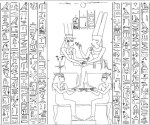

Djehuti, God of Wisdom & Holy Writing, notably referred to the Sacred Nile Valley Lands and Complexes as “The Temple of The World”… Below are a selection of Proverbs inscribed on Ipet Resyt‘s walls that would instruct BaNtu (‘people of Ntu/God’ – pl. of MuNtu/’person…’) in deeper understandings of their Universe & of the eternal ubuNtu Mystery & Divine Order/Ma’at that exists “As Above, So Below… As Within, So Without…”

GODHOOD / DISCIPLESHIP
- Wo/man, know yourself… and you shall know [the] god/dess.
- A wo/man’s heart is her/his own Neter [God/dess].
- If the Master teaches what is error, the disciple’s submission is slavery. If he teaches truth, this submission is ennoblement.
- Not even the greatest Master can go one step for his disciple; in himself he must experience each stage of developing consciousness. Therefore he will know nothing for which he is not ripe.
- A phenomenon always arises from the interaction of complementarity. If you want something look for the complement that will elicit it. Set causes Heru/Horus. Heru/Horus redeems Set.
 Altruism is the mark of a superior being.
- Seek peacefully, you will find.
- One’s moral qualities are measured by one’s deeds.
- The kingdom of Heaven is already within you; if you understand yourself you will find it.
- The body is the house of the God/dess. That is why it is said, “Wo/man know thyself.”
WISDOM / JUDGEMENT / MA’AT
- Judge by cause, not by effect.
- You will free yourself when you learn to be neutral and follow the instructions of your heart without letting things perturb you. This is the way of Ma’at.
- Ma’at, who links universal to terrestrial, the divine with the human is incomprehensible to the cerebral intelligence.
- Leave him in error who loves his error.

- In every vital activity it is the Path/Free-quency that matters.
- People bring about their own undoing through their tongues.
- If you search for the laws of harmony, you will find knowledge.
- If his heart rules him, his conscience will keep him out of trouble.
- Every man is rich in excuses to safeguard his prejudices, his instincts, and his opinions.
- The first concerning the ‘secrets’: all cognition comes from inside; we are therefore initiated only by ourselves, but the Master gives the keys. The second concerning the ‘way’: the seeker has need of a Master to guide him and lift him up when he falls, to lead him back to the right way when he strays.
- Understanding develops by degrees.
- As to deserving, know that the gift of Heaven is free; this gift of knowledge is so great that no effort whatever could hope to ‘deserve’ it.
- An answer is profitable in proportion to the intensity of the quest.
- Listen to your convictions, even if they seem absurd to your reason.
- Know the world in yourself. Never look for yourself in the world, for this would be to project your illusion.
- Each truth you learn will be, for you, as new as if it had never been written.
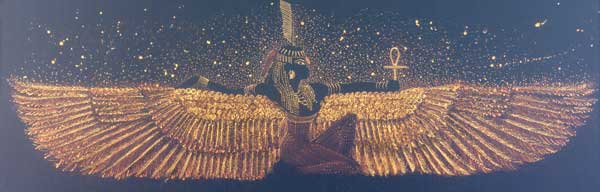
Ma’at ~ Beloved of Djehuti
GOVERNING
- Envious greed must govern to possess and ambition must possess to govern.
- A house has the character of the man who lives in it.
- Organization is impossible unless those who know the laws of harmony lay the foundation.
- When the governing class isn’t chosen for quality it is chosen for material wealth: this always means decadence, the lowest stage a society can reach.

was-djed-ankh symbols
- Two tendencies govern human choice and effort: the search after quantity and the search after quality. They classify humankind. Some follow Truth, others seek the way of animal instinct.
- Social good is what brings peace to family and society.
NATURE AS TEACHER
- The best and shortest road towards knowledge of truth is Nature.
- If you are searching for a Neter (God/dess), observe Nature!
- The body is the house of god/dess. That is why it is said, “Wo/man know yourself.”
- To teach one must know the nature of those whom one is teaching.
- All is within yourself. Know your most inward self and look for what corresponds with it in nature.
- The seed cannot sprout upwards without simultaneously sending roots into the ground.
- The seed includes all the possibilities of the tree…. The seed will develop these possibilities, however, only if it receives proper nourishment and corresponding energies from the sky.

- Grain must return to the earth, die, and decompose for new growth to begin.
- All seeds answer to light, but the color is different.
- The plant reveals what is in the seed.
- There grows no wheat where there is no grain.
- The nut doesn’t reveal the tree it contains.
- Always watch and follow nature.
- All organs work together in the functioning of the whole.
KNOWLEDGE / TEACHING / LEARNING / INTELLIGENCE
- The way of knowledge is narrow.
- Your body is the temple of knowledge.
- Knowledge is not necessarily wisdom.
- Love is one thing, knowledge is another.
- For knowledge… you should know that peace is an indispensable condition of getting it.
- The first thing necessary in teaching is a master; the second is a pupil capable of carrying on the tradition.
- We must not confuse mastery with mimicry, knowledge with superstitious ignorance.

- Popular beliefs on essential matters must be examined in order to discover the original thought.
- Physical consciousness is indispensable for the achievement of knowledge.
- A man can’t be judge of his neighbor’s intelligence. His own vital experience is never his neighbor’s.
- Knowledge is consciousness of reality. Reality is the sum of the laws that govern nature and of the causes from which they flow.
- A pupil may show you by his own efforts how much he deserves to learn from you.
- When the student is ready, the teacher will appear.
- Images are nearer reality than cold definitions.
- Men need images. Lacking them they invent idols. Better then to found the images on realities that lead the true seeker to the source.
- True sages are those who give what they have, without meanness and without secret!
 True teaching is not an accumulation of knowledge; it is an awakening of consciousness which goes through successive stages.
- It is better not to know and to know that one does not know, than presumptuously to attribute some random meaning to symbols.
- What reveals itself to me ceases to be mysterious for me alone. If I unveil it to anyone else, he hears mere words which betray the living sense: profanation, but never revelation.
- An answer brings no illumination unless the question has matured to a point where it gives rise to this answer which thus becomes its fruit. Therefore learn how to pose a question.
- To know means to record in one’s memory; but to understand means to blend with the thing and to assimilate it in one’s self.
- There are two kinds of error: blind credulity and piecemeal criticism. Never believe a word without putting its truth to the test; discernment does not grow in laziness; and this faculty of discernment is indispensable to the Seeker. Sound skepticism is the necessary condition for good discernment; but piecemeal criticism is an error.
VISION / CONSCIOUSNESS / AGENCY

- Growth in consciousness doesn’t depend on the will of the intellect or its possibilities but on the intensity of the inner urge.
- Routine and prejudice distort vision. Each man thinks his own horizon is the limit of the world.
- By knowing one reaches belief. By doing one gains conviction. When you know, dare.
- Our senses serve to affirm, not to know.
- The key to all problems is the problem of consciousness.
- Peace is the fruit of activity, not of sleep.
- Exuberance is a good stimulus towards action, but the inner light grows in silence and concentration.
- Every man must act in the rhythm of his time… such is wisdom.
- Everyone finds himself in the world where he belongs. The essential thing is to have a fixed point from which to check its reality now and then.
- Man must learn to increase his sense of responsibility and of the fact that everything he does will have its consequences.
- If you would build something solid, don’t work with wind: always look for a fixed point, something you know that is stable… yourself.
- If you would know yourself, take yourself as starting point and go back to its source; your beginning will disclose your end.
- What you are doing does not matter so much as what you are learning from doing it.
- The only thing that is humiliating is helplessness.
- The only active force that arises out of possession is fear of losing the object of possession.
- If you defy an enemy by doubting his courage you double it.
- Experience will show you, a Master can only point the way.

Mut~Amun~MuNtu/Khonsu
Selected References:
John Anthony West in the Temple of Luxor – 2015
De Lubicz, Isha Schwaller; Lamy, Lucie (1954). Her-Bak: The Living Face of Ancient Egypt. Hodder and Staughton.
De Lubicz, Isha Schwaller; Lamy, Lucie (1978). Her-Bak: Egyptian Initiate. Inner Traditions International.
De Lubicz, R.A. Schwaller; Lamy Lucie (1981). The Temple in Man: Sacred Architecture and the Perfect Man. Inner Traditions. (First published 1949)
Malaika Mutere, Ph.D. is author of Towards an Africa-centered and pan-African theory of communication: Ubuntu and the Oral Aesthetic perspective Communicatio 38 (2) 2012: 147-163
“Reparation of the African Mind” ~ GDOD (guest re-post)
 When the humble among us do great things reflecting a path to the greater good for the collective, those deeds are usually the gifts inspired by the ancestral realm reminding us of their guidance, living in us. Every time we find ourselves in the past attempting to remember stories of our true selves or jump into the future imagining where we can be as a people, we come closer to the possibilities which motivate what we have to do now. Read More
Amun~Mut~MuNtu: The Triad of Waset
 Waset – meaning “City of the Scepter” or alternatively “City of the Set” – was the Kemetic/ancient Egyptian name of Thebes, the Greek designation for the fourth Upper Egyptian nome along Africa’s Nile River. In the religion of Kemet (meaning land of the Blacks), Set (Seth in Greek) was god of the desert, storms, disorder, violence and foreigners… the quintessential antagonist. The Was scepter on the other hand represents the power and dominion of gods, pharaohs, and priests over such an enemy presence. Amplified by amulets such as the ankh (key of life) and the djed-pillar (god’s backbone/stability), the Was scepter is a symbol of truth, order and control over the forces of chaos that Set brings in. Amun, Mut and MuNtu/Khonsu – commonly referred to as the Triad of “Thebes” – are introduced in this post as a divine representative unit of dominion over chaos established in their pre-Graeco, African context of Waset. Language can act as a cultural tool and/or weapon, depending on where one is centered… Read More
Djehuti ~ Re-Membering Heaven

Djehuti
“And if you wish to see the reality of this mystery, then you should see the wonderful representation of the intercourse that takes place between the male and the female… In that moment, the female receives the strength of the male; the male, for his part, receives the strength of the female… For each of them contributes its own part in begetting… And, moreover, they are holy mysteries, of both words and deeds…” ~ Djehuti, beloved consort of Ma’at (see *NOTE below) Read More
Re-Membering the Goddess
 The influx of Divine Feminine energy in 2013, the Year of the Goddess, is about asserting her standing in Ubuntu. The Goddess brings Ma’at ~ Heavenly order, balance, justice, transformation, nurturing, wisdom, and intuition to our Earthly experience. This force is what awakens the Divine Masculine who exists in Her as She exists in Him. Ubuntu allows the power of Their intention and devotion to eliminate all those who inhabit Her realms, stealing energy and robbing souls to feed their dark agendas. In honor of our dearly departed, with this post I begin at Source… Read More
“I AM ~ SOMEBODY!” – Graffiti as Cultural Text
 “I Am – Somebody!” is a praise poem to African-Americans written in the 1950s by Reverend William H. Borders, Sr., Wheat Street Baptist Church pastor and civil rights activist. The poem is most often associated with the Reverend Jesse Jackson Read More
Emcees ~ Unmasking the Trickster Deity
“With this breath I thee wed, my true nature… my forever… my being. With this breath I say ‘yes,’ and I embrace that which is real within me ~ All that is great within me; all that is beautiful; all that is self-love and gratitude; all that is divine…” (Dion Mial / Michael Bernard Beckwith – lyrics)
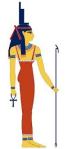
 In Africa the word is endowed with the generative potential of a seed through the concept of nommo ~ spirit breathing life into the universe through its audible articulation or call. Read More
Towards an Africa-centered and pan-African theory of Communication: UbuNtu and the oral-aesthetic perspective
 ABSTRACT ~ This article supports scholarly findings that BaNtu traditions are among the strongest civilizing forces in the United States. Positing pop music as a paradigm of proof, the author argues for a cultural decolonization and corrective understanding of this expression as a manifestation of Africa’s oral traditions and the global agency of the continent’s cultural custodians. Read More

 Malaika Mutere