
Swahili Wisdom/Sayings ~ Kangas
 Extremely popular throughout East Africa, the kanga (alternatively called leso) is a colorful rectangular piece of fabric that is distinguished by the different Kiswahili sayings or proverbs adorning each piece. Artifacts of the Swahili culture dating back to the mid 19th century, kangas are a well-admired form of clothing worn by women and often paired as shawls or headdresses, but are also used as curtains, tablecloths, bedding, mats, etc. Used by people of all faiths, kangas also often play a key role in major life passages such as birth, puberty, and marriage. Read More
Amun~Mut~MuNtu: The Triad of Waset
 Waset – meaning “City of the Scepter” or alternatively “City of the Set” – was the Kemetic/ancient Egyptian name of Thebes, the Greek designation for the fourth Upper Egyptian nome along Africa’s Nile River. In the religion of Kemet (meaning land of the Blacks), Set (Seth in Greek) was god of the desert, storms, disorder, violence and foreigners… the quintessential antagonist. The Was scepter on the other hand represents the power and dominion of gods, pharaohs, and priests over such an enemy presence. Amplified by amulets such as the ankh (key of life) and the djed-pillar (god’s backbone/stability), the Was scepter is a symbol of truth, order and control over the forces of chaos that Set brings in. Amun, Mut and MuNtu/Khonsu – commonly referred to as the Triad of “Thebes” – are introduced in this post as a divine representative unit of dominion over chaos established in their pre-Graeco, African context of Waset. Language can act as a cultural tool and/or weapon, depending on where one is centered… Read More
Djehuti ~ Re-Membering Heaven

Djehuti
“And if you wish to see the reality of this mystery, then you should see the wonderful representation of the intercourse that takes place between the male and the female… In that moment, the female receives the strength of the male; the male, for his part, receives the strength of the female… For each of them contributes its own part in begetting… And, moreover, they are holy mysteries, of both words and deeds…” ~ Djehuti, beloved consort of Ma’at (see *NOTE below) Read More
Emcees ~ Unmasking the Trickster Deity
“With this breath I thee wed, my true nature… my forever… my being. With this breath I say ‘yes,’ and I embrace that which is real within me ~ All that is great within me; all that is beautiful; all that is self-love and gratitude; all that is divine…” (Dion Mial / Michael Bernard Beckwith – lyrics)
 In Africa the word is endowed with the generative potential of a seed through the concept of nommo ~ spirit breathing life into the universe through its audible articulation or call. Read More
Auset ~ Divine Mourner
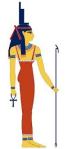
Auset – (Gr. Isis) – one of the earliest and most beloved representations of the Goddess was known both as the Giver of Life and the Divine Mourner. She is the sacred model of African woman-hood and matriarchal agency who is at the genesis of life itself and its passage into the afterworld. Read More
The Language the Shulamite Cries In ~ “The Song of Songs”
 “You can speak another language. You can live in another culture. But to cry over your dead, you always go back to your mother tongue… You know who a person is by the language they cry in.”
Read More
Heru/Horus… Hero
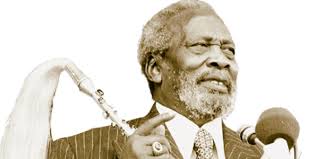 When the missionaries came to Africa, they had the Bible and we had the land. They said, “Let us pray.” We closed our eyes. When we opened them, we had the Bible and they had the land. ~ Kenya’s post-colonial Father: Mzee Jomo Kenyatta, Prime Minister of Kenya (1963-64), President (1964-78), and author of “Facing Mount Kenya.” These words are sometimes attributed to South African Archbishop Desmond Tutu (Winner: Nobel Peace Prize, 1984; Albert Schweitzer Prize for Humanitarianism, 1986; Pacem in Terris Award, 1987; Sydney Peace Prize, 1999; Gandhi Peace Prize, 2005; and Presidential Medal of Freedom, 2009). Read More
“How the Old Great Stories Were Created” – part 2. Guest Blogpost written by James Bonnet
 This week James Bonnet explains that it’s not the historicity of the marvelous tales surrounding certain figures, but rather the “hidden truths” – which were maintained through their oral tradition accounts – that make these stories worthy… Read More
“How the Old Great Stories Were Created.” Guest Blogpost written by James Bonnet
The old great stories, which really could change people’s lives, were not authored by individuals the way stories are today but were evolved naturally and instinctively by unconscious processes in oral traditions. And even if they started out as made-up or true stories, revelations or dreams, they still ended up for long periods of time in oral traditions and that became the principal dynamic behind their creation. Read More

 Malaika Mutere