
Mazisi Kunene ~ Creative Power
 Mazisi Kunene – freedom fighter, literary icon, Africa’s poet laureate, and South Africa’s first poet laureate – was born in Durban, the “modern-day” province of KwaZulu-Natal on May 12th, 1930. Kunene championed African oral traditions, conveying their inherent value in his writings which were originally in Zulu before being translated into other languages. Read More
Auset ~ Divine Seeker
 Born in 1803 and orphaned at age 5, Maria W. Stewart was an American domestic servant who became a teacher, journalist, abolitionist, lecturer and women’s rights activist. She urged “daughters of Africa” to reject the negative images of Black womanhood that were/are so pervasive, but to instead possess the power of self-definition – in effect to seek, find, and anchor their Divinity as Goddess Auset. In an 1833 speech, Stewart said: “Like King Solomon, who put neither nail nor hammer to the temple, yet received the praise; so also have the white Americans gained themselves a name, like the names of the great men that are in the earth, whilst in reality we have been their principle foundation and support. We have pursued the shadow, they have obtained the substance; we have performed the labor, they have received the profits; we have planted the vines, they have eaten the fruits of them.”
 The power of images [for good or ill] has been well-known since ancient times in Africa, as evident in the following proverb from the Luxor Temple of Amun-Mut-Montu/Khonsu: “People need images. Lacking them they invent idols. Better then to found the images on realities that lead the true seeker to the source.” The Gods of Khemet created a number of art-for-life’s-sake images that would, when properly looked upon, indeed lead the divine seeker to the source. Knowing the little strength of the angel of the church in Philadelphia, the God of Revelation encodes one of these key images in His instructions: “I know thy works: behold, I have set before thee an open door, and no man can shut it… hold that fast which thou hast, that no man take thy crown…” [Rev 3: 7-12 KJV]
 The Divine Seeker or ‘true seeker’ – from a ‘daughters of Africa’ perspective – is represented in the archetype of Auset, Queen and wife of Khemet’s beloved King Ausar. According to their mythology, the respect Ausar was able to command on earth and in the nether-world as the bringer of civilization made his ‘younger brother’ – a god with pedophilic issues named Seth [Gr.] – so jealous that, in his bloody coup for the throne, Set[h] murdered and cut the king into 14 pieces which he scattered throughout the wilderness to prevent Ausar’s resurrection. In modern terms, Set [god of the wilderness, chaos, violence, foreign oppressors…] is understood to be the adversary who enslaved Africans and stole land and other treasures via slavery, colonialism, apartheid, etc. Thus the ‘wilderness’ is the diaspora where his predatory neo-colonial rule and campaign of chaos and extermination expanded. Auset must search this wilderness for the pieces of her beloved while holding fast to her crown of life which, imaged as the royal throne, represents her shero’s journey and consciousness of who she is.
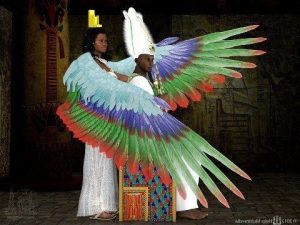 Auset ~ Divine Seeker – shows up as the Shulamite in the Song of Songs, the biblical book attributed to King Solomon who, though featured in the song, is not the true ‘Majesty’ Auset seeks. Famed for wisdom, wealth, and possessing 700 wives and 300 concubines, Solomon represents the unease of one who is trapped in an excess of creature comforts, including his gross objectification of the divine feminine. It’s very clear that the Shulamite [Auset] is critical of the modalities of capitalist exploitation, including occupation & sharecropping which have created Solomon’s trappings of power &, in turn, required military guardians. She says: “Behold his bed, which is Solomon’s; threescore valiant men are about it… They all hold swords, being expert in war: every man hath his sword upon his thigh because of fear in the night.” [SoS 3:7-8 KJV] “Solomon had a vineyard at Baalhamon; he let out the vineyard unto keepers; every one for the fruit thereof was to bring a thousand pieces of silver. My vineyard, which is mine, is before me: thou O Solomon, must have a thousand, and those that keep the fruit thereof two hundred.” [SoS 8:11-12 KJV]
The Song of Songs represents Auset’s mourning as she communicates with and searches for the pieces of her Twin Flame in a ‘wilderness’ [diaspora] caused by the misdeeds of Set, including murder, mutilation, scattering, plunder and rape. Auset’s crown of life, denoting her consciousness, purpose and allegiance, is significantly different from those which are worn in the capitals of Europe – their opulent design and materials conspicuously symbolizing conquest of peoples and control of resources. Without this Africa-centered understanding which would acknowledge Auset’s presiding role in Ausar’s resurrection and return, biblical scholars and translators promote other interpretations even while struggling to explain her divinity and/or justify her existence in ‘their’ holy book. Introducing herself to an audience of the “daughters of Jerusalem,” the Shulamite [Auset] makes clear: “I am black… My beloved is mine, and I am his: he feedeth among the lilies.” [SoS 2:16 KJV]  Local to Upper Khemet – southern source of the Nile River – the lily is also the symbol of resurrection in Khemetic imagery. “I am my beloved’s, and his desire is toward me.” [SoS 7:10 KJV]
Euro-patriarchal translations and commentaries surrounding the Shulamite’s introduction of herself have varied from “I am black and beautiful…” [New Revised Standard Version Catholic Ed] to more sinister/racist ethnic notions – specifically, as Maria W. Stewart pointed out, against Black womanhood:
- “I am black but beautiful…” [Douay-Rheims Bible]
- “I am black but lovely…” [New American Standard Bible 1977]
- “I am black, but comely…” [American KJV; American Std. V; Webster’s Bible Trans; JPS Tanakh 1917; Darby Bible Trans; English Rev. V]
- “I am very dark, but lovely…” [English Standard Version]
- “I am dark but beautiful…” [New Living Translation]
- “I am dark, but lovely…” [New KJV 2000; World English Bible; NET Bible; New Heart English Bible]
 “Dark am I, and comely…” [Young’s Literal Translation]
- “Daughters of Jerusalem, I am dark like the tents of Kedar, yet lovely like the curtains of Solomon…” [Holman Christian Standard Bible]
- “I am dark, O ye daughters of Jerusalem… desirable as the booths of Kedar, as the tents of Solomon…” [Jubilee Bible 2000]
- The word “black” does not necessarily mean that the skin is black, but rather sunburnt, dark brown… the livid or swarthy appearance of one who has suffered long from famine and wretchedness. There is certainly no reason to take the word as an argument for the bride being Pharaoh’s daughter… She has been living in the fields, and is browned with the ruddy health of a country life… The country maiden feels the greatness of the honor, that she is chosen of the king… [Pulpit Commentary]
- …she was “black” in herself through original sin and actual transgression; in her own eyes, through indwelling sin, and many infirmities, spots, and blemishes in life; and in the eyes of the world, through afflictions, persecutions, and reproaches…: “but comely” in the eyes of Christ, called by him his “fair one”, the “fairest among women”, and even “all fair” through his comeliness put upon her, the imputation of his righteousness to her; through the beauties of his holiness upon her; through the sanctifying influences of his Spirit…
 being in a church state, walking in Gospel order… “desirable”(y) to Christ, and to his people. [Gill’s Exposition of the Bible]
Certainly, if such white male interpretations of the black female principal in the Song of Songs prevail, then they should at the very least co-exist with culturally-centered interpretations of the African Queen. One version of the Song of Songs’ backstory – which has received extensive Jewish, Islamic, and Ethiopian elaborations – describes King Solomon being tested with hard questions during his visit from the “Queen of the South” AKA the Queen of Sheba. The Kebra Nagast [“Glory of the Kings”] tells the national saga of Ethiopian Emperors being descendants of King David as a direct outcome of their Queen’s visit with his son Solomon. Followers of the Rastafari movement believe Emperor Haile Selassie I – the last descendant of the Solomonic line to rule Ethiopia [from 1930 to 1974] – to be the Messiah and Lion of the Tribe of Judah.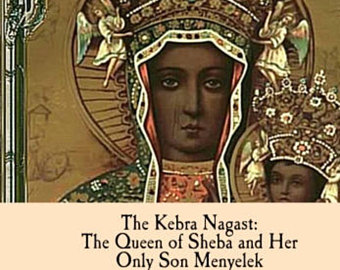 The African Queen’s storied visit is acknowledged in the bible thus: “The queen of the south shall rise up in the judgment with this generation, and shall condemn it: for she came from the uttermost parts of the earth to hear the wisdom of Solomon; and, behold, a greater than Solomon is here.” [Matthew 12:42 & Luke 11:31 KJV]
Told in highly symbolic language, the Song of Songs is itself a riddle worthy of the Queen of Sheba who purportedly used riddles to test Solomon’s wisdom, and to apparently expose the limitations of Euro-patriarchal translations and analyses [above]. Who knows what manner of ‘darkness’ lies in the tents of Kedar or curtains of Solomon to which the Shulamite is being compared by such biblical professionals?! She is not “original sin” in need of white male prescriptions for “salvation.” Nor does she seem particularly desirous of the kind of ‘majesty’ Solomon represents – at least not in my reading of the Song of Songs in which the Shulamite’s mission is that of the African Goddess Auset. As divine seeker who wears a distinct crown of life, it’s critical that Auset be able to distinguish between chaos/shadow/idol versus truth/substance/source as the above-mentioned proverb from the Luxor Temple states. Only in this way does she prove herself worthy of the crown and title bestowed on all true African Queens: “She Who Sees Set and Heru.”
Goddess Auset is…❤❤❤
Panther ~ Black Rite-of-Passage
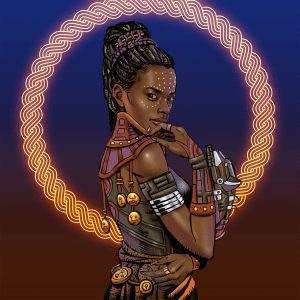 “Great, another broken white boy for us to fix!” One of several funny lines from Black Panther delivered by Shuri in reference to CIA Agent Everett Ross. “What the hail!” My line when I left the theater on President’s Day with mixed feelings about the movie, but mostly about the droplets of ice which had just begun falling from LA’s South Bay skies onto my African head-wrap. Was this a sign? Movie promos had gone hard with Gil Scott Heron’s classic The Revolution Will Not Be Televised, I mused while trying to extract pieces of the odd weather from my son’s fro for inspection. But why not build a strategic alliance between African cousins rather than having T’Challa, in true bourgeois liberal fashion, make a Wakanda charity-case out of Killmonger’s Oakland after the fact? Mom, it’s not your story… Huh?! Read More

KuNtu: A Well-Painted Home
 I didn’t grow up a comic-book super-fan (more like occasional reader), nor grew to become enticed by Hollywood’s silver-screen adventures of super-heroes from the big-3 comic-book universes: Marvel, DC, and X-Men. Marvel’s recently-released trailer for the Black Panther movie (set for release on February 16th, 2018) may just have changed all that. Read More
HaNtu: Afrofuturism “In the Stone”
~ Posted in honor of African-American Music Appreciation Month, June 2017 ~
 “The artist is meant to put the objects of this world together in such a way that through them you will experience that light, that radiance which is the light of our consciousness and which all things both hide and, when properly looked upon, reveal. The hero journey is one of the universal patterns through which that radiance shows brightly.” [Joseph Campbell, Pathways to Bliss] Read More
PTAH ~ Hollywood Re-members…
 The biggest night in show business is the annual Academy Awards show which pulls in a television viewing audience of 40 million (give or take). It’s where the Academy of Motion Picture Arts and Sciences (founded in the 1920s) recognizes the merits of its most talented artists/craftspeople and honors them with a golden idol, a statue whose nick-name Oscar means ‘divine spear.’ The specter of Hollywood as an ideological battlefield where dreams and stories as cultural artifacts fight, bleed and die for acceptance in the dream factory run by mainstream [white] gods is not farfetched from the industry’s competitive, often cut-throat reality. Harsher still are the ironic implications of the Oscar award itself whose form Read More
Heru ~ Djedi Sky Walker
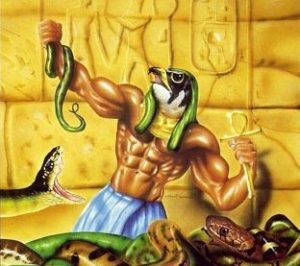 “Sky God… God of Hunting… Warrior God… Lord of the Horizon… Divine Falcon… He who came forth from Hapi [Africa’s Nile God]… Dweller in Sopdet [Star of Auset]… God of Kingship… Heir of his Father…” are some of the epithets ascribed to Heru, one of Africa’s most storied gods of salvation. Heru‘s hunting prowess is represented in the falcon or hawk whose right and left eyes respectively denote the sun and moon
 ; and who is said to hold the stars in his speckled feathers as his wings create the wind. The circumstances of Heru’s placement in the Holy Trinity which includes Ausar (his father) and Auset (his mother), and his triumphant role in the battle against evil [Set], make him a model for saviors, heroes, and the super-heroes of story, religion, comic-book universes and their silver screen adaptations. The Kemetic Trinity itself may conceivably be connected to the older African Triad of Waset, namely Amun~Mut~Montu/Khonsu.
  Among his many epithets, Amun (“Amen” in prayer) – Lord of All, whose name means “invisible… mysterious of form… the hidden one” who encompasses every aspect of creation – is referred to as “Eldest of the Sky.” [Papyrus Boulaq 17]
The classic battle of “good versus evil” evolves in the immortal myth of Heru versus his “uncle” Set who not only murders beloved King Ausar in order to usurp the throne of Kemet, but mutilates Ausar’s body and scatters its pieces throughout the wilderness (diaspora). Auset roams the wilderness in search of her husband’s 14 pieces which she reassembles and mummifies, minus his penis which remains missing.  However, through the summoning of magical powers, Ausar is enabled to posthumously impregnate Auset with the seed of their son, Heru. (In some versions, Heru is interpreted as the newborn sun rising “from a lotus bloom that expanded its leaves on the breast of the primordial deep.”) Ausar’s “resurrection” creates Auset’s “virgin birth” of “savior” Heru who, in his later years goes on to avenge his father’s murder and challenge Set for the throne of Kemet.
  This epic struggle – which additionally exposes the pedophilic proclivities through which Set tried to overcome his “nephew” – is eventually settled before a Council of Elder Gods in favor of Heru as Kemet’s rightful heir and victor of the battle over evil/chaos.
Over the millennia Set became associated with the Hyksos – hostile foreign invaders from the desert or wilderness who enslaved the native men along with their wives and children. Thought to have the white skin and red hair attributed to his followers, Set’s links to Africa’s parched, infertile desert (the “red place”) expanded to represent all deserts and foreign lands.  His glyph appears in the words for “turmoil… confusion… illness… storm… and rage” which eventually cemented Set’s negative brand as god of the desert, storms, disorder/chaos, violence and foreign oppressors (enslavers/colonizers/apartheid architects, etc.).
 While Heru represented Lower Kemet, his eventual victory over Set gave him the distinction of being a unification god, which is symbolized in the pschent crown the avenging hero/Heru is typically portrayed wearing. The deshret (red portion of the crown) represents the North/Lower Kemet, while the hedjet (white portion) represents South/Upper Kemet. Sema-tawy – an expression meaning “Uniter of the Two Lands” – was an alternative depiction, showing the human trachea (like the Nile) unifying Kemet with the entwined plants of the papyrus (native to Lower Kemet) and lily/lotus blossom (native to Upper Kemet).
  Heru, the falcon sky god, was worshipped at KomOmbo in a temple which was also dedicated to Sobek, a crocodile god associated with Set. There are depictions of Heru alternatively wearing the double feather crown that is characteristically associated with Amun – “Eldest of the Sky” – who in his own right also holds the title “Lord of the Throne (Nst) of the Two Lands.” [Papyrus Boulaq 17]
A proverb from the Luxor Temple of Amun~Mut~Khonsu adjures: “Popular beliefs on essential matters must be examined in order to discover the original thought.” Several scholars have discussed at length the relationships one finds between original African mythology and the later popular beliefs of Christianity, including those mentioned above (“holy trinity… resurrection… virgin birth… savior…”) and Heru’s association with the Messianic star of Auset – Sopdet – which heralds the annual flooding of the Nile. A related proverb from the Luxor Temple advises: “Men need images. Lacking them they invent idols. Better then to found the images on realities that lead the true seeker to the source” …

Oscar (Hollywood 1929-)/Ptah (Kemet 760BCE-)
One only need look at the Oscar statue to begin to understand how deeply bound the American image industry is to African Gods and their mythologies. So it’s unfortunate that the silver screen has become a showcase for white self-idolatry with scripts that continue this type of exploitation and cultural imperialism including (i) Nikolaj Coster-Waldau as Heru in the 2016 release of Director Alex Proyas’ vision of Gods of Egypt; (ii) Superman – as some would argue (ref: “Atlanta Black Star” article); and of course (iii) Star Wars:
Djedi were Masters of the Force in Kemet (ancient Egypt), magician priests who guarded powerful kings and their immortality. As with Star Wars, “Holy Grail” legends such as those of King Arthur and his Knights of the Round Table evolved much, much later out of these Djedi histories from Kemet. The Djed – meaning pillar or backbone – is one of the symbols carried by kings of Kemet which is key to their immortality. The ‘dj’ root of the word denotes the serpent which has been awakened by the Djedi, and is raised up through the pillar to the crown of the Djedi King. Harnessing the Force for this inner ascension thus distinguished the Djedi, enabling successful initiates to advance in their abilities to access supernatural powers for use in feats of magic, overcoming enemies, healing, teleportation, resurrection, and so on.  The ultimate Djedi Master of the Force is said to be Djehuti (“Thoth” in the later Greek appropriations), Chief Scribe to the Gods of Kemet who himself mentored Heru and intervened in his struggles against Set. Djehuti is consort to Ma’at – goddess who represents the Kemetic concept of truth, balance, order, harmony and justice. It was Ma’at who is said to have decreed Heru as the rightful ruler of Kemet over Set, thus dispensing one of her main roles of defending the order of the universe from the chaos of the dark side.
In the alternate Star Wars universe, the battle between good and evil is waged by the “Jedi”/Djedi knights such as Luke Skywalker against the “Sith”/Set forces of darkness. Thus, some would extrapolate that this highly popular franchise is just another example of how Tinseltown’s “entertainment”-industry elite itself, and through such practices, acts as Set – profiting while programming consumer masses for dysfunction in its questionable custodianship of Africa’s cultural and spiritual resources; at the very least by not attributing proper credit, but also with its racist circumscriptions of “black” versus “white” roles…
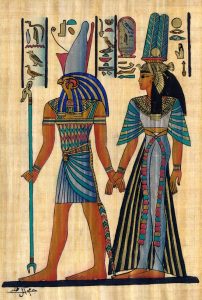 Enter the “True Seeker” mentioned in the proverb – AKA the African Djed-I Queen! (Note: the linked post discusses the bond between the Djed pillar and one of the African Queen’s roles.) As yet another proverb from the Luxor Temple of Amun~Mut~Khonsu states: “A phenomenon always arises from the interaction of complementarity. If you want something, look for the complement that will elicit it. Set causes Heru. Heru redeems Set.” Queens of the First Dynasty bore the title “She Who Sees Heru and Set” in relation to the Djed-I Queen’s ideal consort being worthy as Heru (in His divine-masculine/higher nature) who has overcome Set (his chaos-inducing dysfunctional-shadow/lower nature). As discussed more fully in my post “Pyramid Wisdom & Story” – which offers an interpretation of the “true love written in the stone” [EW&F] (see music video link, plus interior design of the Great Pyramid of Giza below) – the archetypes actively embodied in the Djed-I Queen’s Heru/Hero are: (i) King; (ii) Warrior; (iii) Magician; & (iv) Lover.
 Heru – as “God of Kingship” and African Hero – is the Djedi Sky Walker represented in the Hunter/Warrior constellation that the shaft in the King’s Chamber of the Great Pyramid of Giza points to. In Her aspect as Auset, the Djed-I Queen is the “Divine Mourner” and “True Seeker” who searches through the wilderness for Her true beloved – as Heru, in turn, hunts for His Djed-I Queen. She partners in the reparation of their Royal and Holy consortium, which weakens Set the stronger it gets. In Her aspect of Ma’at, the Djed-I Queen has discovered Her Truth and the Balance that must exist with Her beloved (Heru in His aspect of Djehuti ~ Magician & Scribe to the Gods) that will instill the Heavenly Order which prevents the universe from returning to a state of chaos (represented by “evil” Set). Her Lover – the Djedi King – is her Amun/Amen, and perhaps their Heru–S/Hero journey is the quintessential telling of the epic and timeless story of the Love-of-Power [Set] being overcome by UBUNTU ~ the Power-of-Love ❤ ❤ ❤
Pyramid Wisdom & Story
 “Pyramids are universal symbols of the human Self.” This statement caught my attention in the book entitled King, Warrior, Magician, Lover: Rediscovering the Archetypes of the Mature Masculine by Robert Moore (Jungian psychologist) and mythologist Douglas Gillette [NY: Harper Collins, 1990]. As I searched for how that was meant (“pyramid” as abstract geometric template, or as African architectural wonder and cultural treasure?) I got caught up instead in the discussion of masculine archetypes, one for each face of the pyramid. King, Warrior, Magician, Lover – the “mature” (men) archetypes – make up their own pyramid, but each has its “immature” (boy) correlates which make up a smaller pyramid within. Unfortunately for society, according to the scholars, “the devastating fact is that most men are fixated at an immature level of development.” Read More
Purple Reign ~ Symbols of African Sovereignty
A color with mystical and noble qualities, purple/violet is associated with royalty, spirituality, creativity, and higher realms. Representing the upper end of the visible color spectrum of Light, purple/violet is both a completion (spiritual mastery) as well as a beginning of the energy vibration beyond the physical.  This is the energy field in which one realizes the eternal union that exists between one’s self and the All (one’s infinite/higher/pure consciousness) – which is the goal of the soul’s journey in this life and beyond. Purple/violet governs love and the crown chakra, at the top of the head…
This post offers a brief look at the symbolism and meaning in the crowns worn by some of Africa’s sovereigns – gods and goddess archetypes from Kemet (ancient Egypt) – along with some of the fundamental cultural wisdom that governs their being and evolution. It’s posted during African American Music Appreciation Month (June), in remembrance of the late Prince Rogers Nelson (June 7, 1958 – April 21, 2016 … Sometimes It Snows In April) – Purple Rain composer, performer and interpreter [*] of African cultural symbols of love and royalty. This post honors the god(dess) who meets, supports and delivers us with such gifts of genius in our epic life quest for truth/ascension/unity-consciousness/light, repair, & harmony. UbuNtu~ I Am, Because We Are… Read More
Reparations ~ Restoring the Divine Feminine: Ma’at
 And if thy brother, a Hebrew man, or a Hebrew woman, be sold unto thee, and serve thee six years; then in the seventh year thou shalt let him go free from thee. And when thou sendest him out free from thee, thou shalt not let him go away empty: thou shalt furnish him liberally out of thy flock, and out of thy floor, and out of thy winepress: of that wherewith the LORD thy God hath blessed thee thou shalt give unto him. And thou shalt remember that thou wast a bondman in the land of Egypt, and the LORD thy God redeemed thee: therefore I command thee this thing today. (Deuteronomy 15:12–15)
Ta-Nehisi Coates uses this Old Testament biblical quote at the beginning of his article, The Case for Reparations, in which he contends that America will never be whole until it has settled its moral debts. Read More
“Gods of Kemet”
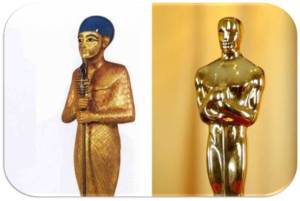
Ptah (Kemet 760BCE-) / Oscar (Hollywood 1929-)
SYNOPSIS [Movie?]: “The survival of humanity hangs in the balance when SET kills and mutilates the body of his brother AUSAR in his evil bid to usurp the throne of Kemet, in Africa’s Nile Valley Ma’atrix. The universe is plunged into chaos and conflict as Set scatters the dismembered parts of Ausar throughout the African Diaspora, forcing his brother’s lamenting widow, AUSET, to search and piece her husband’s body back together. Hoping to save the world and be re-paired with his true love, MA’AT, a scribe to the Gods of Kemet named DJEHUTI forms an alliance with HERU, the avenging son he’d helped Ausar and Auset posthumously conceive. Their battle against Set and his henchmen takes them across the wilderness – an apocalyptic testament of Set’s tumultuous rule; Read More

 Malaika Mutere