
Mut ~ Djed-I Queen
 “Who is she that looketh forth as the morning, fair as the moon, clear as the sun, and terrible as an army with banners?” [Song of Songs 6:10 KJV]
MUT [Mwt/Maut/Golden Dawn] – meaning “mother,” is the name of the African Queen who giveth birth, but was herself not born of any. Through the Old Kingdom period of ancient Egypt (2,686-2,134 BCE) Mut was believed to have originally existed as the female aspect of Nun (primeval waters). Her stature subsequently evolved during the 18th Dynasty (1539-1292 BCE) as mother from whom the cosmos emerged. Read More
Pyramid Wisdom & Story
 “Pyramids are universal symbols of the human Self.” This statement caught my attention in the book entitled King, Warrior, Magician, Lover: Rediscovering the Archetypes of the Mature Masculine by Robert Moore (Jungian psychologist) and mythologist Douglas Gillette [NY: Harper Collins, 1990]. As I searched for how that was meant (“pyramid” as abstract geometric template, or as African architectural wonder and cultural treasure?) I got caught up instead in the discussion of masculine archetypes, one for each face of the pyramid. King, Warrior, Magician, Lover – the “mature” (men) archetypes – make up their own pyramid, but each has its “immature” (boy) correlates which make up a smaller pyramid within. Unfortunately for society, according to the scholars, “the devastating fact is that most men are fixated at an immature level of development.” Read More
Reparations ~ Restoring the Divine Feminine: Ma’at
 And if thy brother, a Hebrew man, or a Hebrew woman, be sold unto thee, and serve thee six years; then in the seventh year thou shalt let him go free from thee. And when thou sendest him out free from thee, thou shalt not let him go away empty: thou shalt furnish him liberally out of thy flock, and out of thy floor, and out of thy winepress: of that wherewith the LORD thy God hath blessed thee thou shalt give unto him. And thou shalt remember that thou wast a bondman in the land of Egypt, and the LORD thy God redeemed thee: therefore I command thee this thing today. (Deuteronomy 15:12–15)
Ta-Nehisi Coates uses this Old Testament biblical quote at the beginning of his article, The Case for Reparations, in which he contends that America will never be whole until it has settled its moral debts. Read More
“Gods of Kemet”
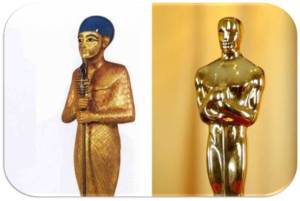
Ptah (Kemet 760BCE-) / Oscar (Hollywood 1929-)
SYNOPSIS [Movie?]: “The survival of humanity hangs in the balance when SET kills and mutilates the body of his brother AUSAR in his evil bid to usurp the throne of Kemet, in Africa’s Nile Valley Ma’atrix. The universe is plunged into chaos and conflict as Set scatters the dismembered parts of Ausar throughout the African Diaspora, forcing his brother’s lamenting widow, AUSET, to search and piece her husband’s body back together. Hoping to save the world and be re-paired with his true love, MA’AT, a scribe to the Gods of Kemet named DJEHUTI forms an alliance with HERU, the avenging son he’d helped Ausar and Auset posthumously conceive. Their battle against Set and his henchmen takes them across the wilderness – an apocalyptic testament of Set’s tumultuous rule; Read More
Amun~Mut~MuNtu: The Triad of Waset
 Waset – meaning “City of the Scepter” or alternatively “City of the Set” – was the Kemetic/ancient Egyptian name of Thebes, the Greek designation for the fourth Upper Egyptian nome along Africa’s Nile River. In the religion of Kemet (meaning land of the Blacks), Set (Seth in Greek) was god of the desert, storms, disorder, violence and foreigners… the quintessential antagonist. The Was scepter on the other hand represents the power and dominion of gods, pharaohs, and priests over such an enemy presence. Amplified by amulets such as the ankh (key of life) and the djed-pillar (god’s backbone/stability), the Was scepter is a symbol of truth, order and control over the forces of chaos that Set brings in. Amun, Mut and MuNtu/Khonsu – commonly referred to as the Triad of “Thebes” – are introduced in this post as a divine representative unit of dominion over chaos established in their pre-Graeco, African context of Waset. Language can act as a cultural tool and/or weapon, depending on where one is centered… Read More

 Malaika Mutere