
“Gods of Kemet”
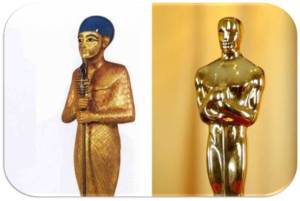
Ptah (Kemet 760BCE-) / Oscar (Hollywood 1929-)
SYNOPSIS [Movie?]: “The survival of humanity hangs in the balance when SET kills and mutilates the body of his brother AUSAR in his evil bid to usurp the throne of Kemet, in Africa’s Nile Valley Ma’atrix. The universe is plunged into chaos and conflict as Set scatters the dismembered parts of Ausar throughout the African Diaspora, forcing his brother’s lamenting widow, AUSET, to search and piece her husband’s body back together. Hoping to save the world and be re-paired with his true love, MA’AT, a scribe to the Gods of Kemet named DJEHUTI forms an alliance with HERU, the avenging son he’d helped Ausar and Auset posthumously conceive. Their battle against Set and his henchmen takes them across the wilderness – an apocalyptic testament of Set’s tumultuous rule; Read More
AbaWanga

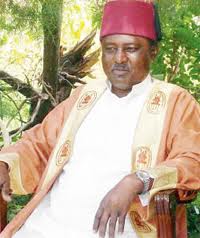
The Wanga (AbaWanga) are a nation of the Luhya people and a historical Kingdom within present day Kenya. They mainly occupy Kakamega County, one of the most densely populated counties in Kenya. The Wanga Kingdom was the most highly developed and centralised kingdom in Kenya’s entire history before the advent of British colonialism in the early 1900s. Today the AbaWanga number around 732,000 and retain the Nabongo as their cultural monarch. The current Nabongo is Peter Mumia II
Contents
|
Origins
The Wanga ancestors were part of the migration that settled in the Kampala area and formed the Buganda Kingdom. In their culture, a king’s brother or cousin from the paternal line is eligible…
View original post 3,502 more words
Djehuti ~ Re-Membering Heaven

Djehuti
“And if you wish to see the reality of this mystery, then you should see the wonderful representation of the intercourse that takes place between the male and the female… In that moment, the female receives the strength of the male; the male, for his part, receives the strength of the female… For each of them contributes its own part in begetting… And, moreover, they are holy mysteries, of both words and deeds…” ~ Djehuti, beloved consort of Ma’at (see *NOTE below) Read More
Re-Membering the Goddess
 The influx of Divine Feminine energy in 2013, the Year of the Goddess, is about asserting her standing in Ubuntu. The Goddess brings Ma’at ~ Heavenly order, balance, justice, transformation, nurturing, wisdom, and intuition to our Earthly experience. This force is what awakens the Divine Masculine who exists in Her as She exists in Him. Ubuntu allows the power of Their intention and devotion to eliminate all those who inhabit Her realms, stealing energy and robbing souls to feed their dark agendas. In honor of our dearly departed, with this post I begin at Source… Read More
Auset ~ Divine Mourner
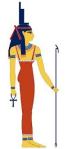 Auset – (Gr. Isis) – one of the earliest and most beloved representations of the Goddess was known both as the Giver of Life and the Divine Mourner. She is the sacred model of African woman-hood and matriarchal agency who is at the genesis of life itself and its passage into the afterworld. Read More
Bantu Roadmaps… The Motown Connection
“You went to school to learn, girl
Things you never, never knew before
Li-i-ike “I-before-E-except-after-C”
And why “2-plus-2-makes-4”
Na… na… Now…
I’m gonna teach you,
All about love…” (J-5)
“A Reasonable African Future” ~ Guest Post written by Molefi Kete Asante, Ph.D.

Molefi Kete Asante, Ph.D. ~ Author
Over the past five hundred years or so Europe has been on a quest to destabilize and dis-establish the agency of African people. The assault has been frontal, sustained, and violent at physical and psychological levels using all dominative instruments of language, symbolism, and warfare. The consequences of this war on Africa have been profound, giving rise to doctrines of white supremacy and black inferiority, African servility, and the negation of African civilization. Read More
Bantu Roadmaps… Random Connections

Desmond Tutu
“Africans believe in something that is difficult to render in English. We call it UBUNTU… It means the essence of being human. You know when it is there and when it is absent. It speaks about humaneness, gentleness, hospitality, putting yourself out on behalf of others, being vulnerable. It embraces compassion and toughness. It recognizes that my humanity is bound up in yours, for we can only be human together.” ~ Desmond Tutu Read More
Uganda: A Multiplicity of Experiences ~ Guest Post (cont’d) written by E. N. Bisamunyu

Eli Nathan Bisamunyu
(RIP ~ May 6th, 2014)
My father, Eli Nathan Bisamunyu, was born into a poor family in 1928 in a remote region of Uganda before my district’s inclusion in Her Britannic Majesty’s Protectorate of Uganda. He survived childhood diseases such as dysentery and typhus that had killed 13 of his siblings. His unexpected appearance on the scene much later compelled his mother to wish for him a different existence from that which his siblings had not survived. In a pioneering experiment she sent him to school where he distinguished himself as a six-year-old pupil amidst a throng of 15-18 year-old boys. My grandmother Rebecca had hoped that that “modern education,” as it was known, would keep him out of harm’s way. Read More
“Uganda: A Multiplicity of Experiences” ~ Guest Post written by Edward Nobel Bisamunyu
 In 2009, after weeks of frustration with my Chinese students’ inability to cope with simple English texts in a science course, I encouraged them to read the China Daily. It was not equal to the entertaining stories or Andy Capp cartoons I enjoyed reading as a child in the Uganda Argus (formerly a British newspaper) thanks in large part to bedtime stories like Cinderella, Red Riding Hood, and Dr Seuss that my mother read aloud to help me overcome my own English reading difficulties. Read More

 Malaika Mutere